|
|
|

RITA MASCIALINO: – INVENT IS TO GO BEYOND REALITY  | Ilija Šaula | |
| |
detail from: KRK Art dizajn
RITA MASCIALINO: – INVENT IS TO GO BEYOND REALITY Franz Kafka remains one of the most enigmatic, yet prophetically resonant figures in European literature. In this dialogue with Rita Mascialino, a philosopher and scholar of Kafka's deep semantics, we examine not only the symbols of his work, doors, keys, and horses, but also what remains unspoken. Silence, the violence embedded in language, and self-transcendence through the black horse become the foundation for a reflective inquiry into truth, power, and existential metamorphosis.
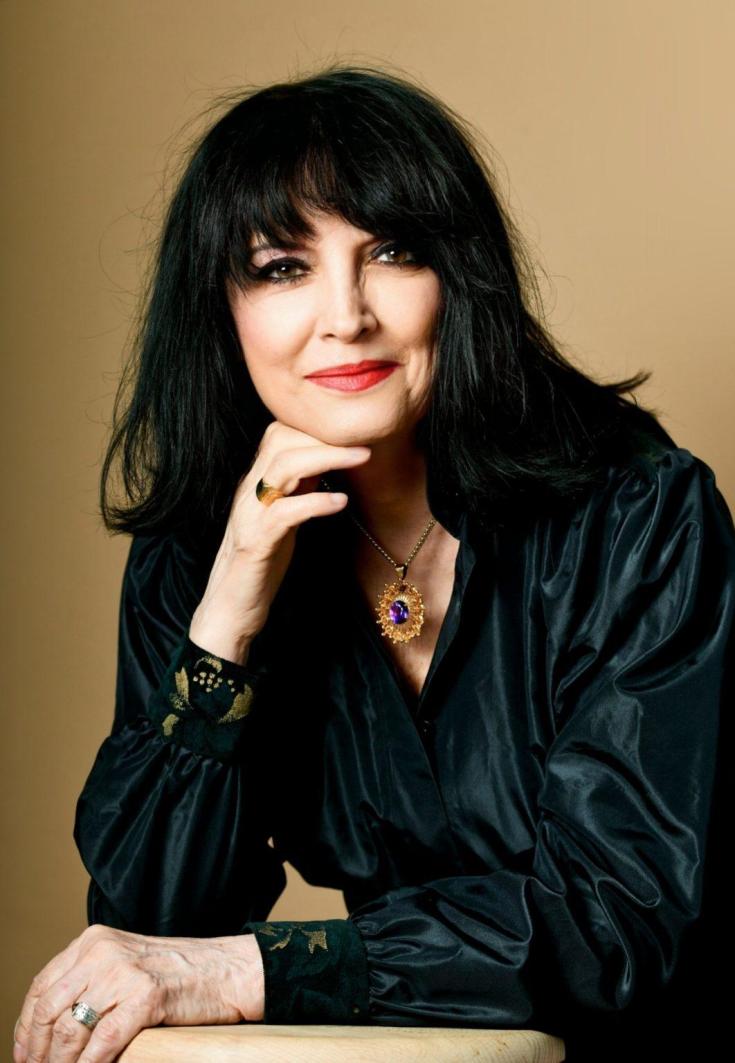 Rita Mascialino
Literary workshop Kordun – 07.25. 2025.Discussed, Ilija Saula
Dear Rita Mascialino, where and when were you born? How was your childhood and education? What determined your further interest and pursuit of literature?
I was born in Genoa on February 10, 1946. I dedicated a literary memory to my childhood in the novel Le carezze negate (Cleup Editrice Università di Padova, 228 pp.), published in 2005. I attended primary school in Padua, then lower and secondary school in Udine, and later graduated in Foreign Languages and Literatures from the University of Venice, known as Ca’ Foscari, where I studied under Professor Ladislao Mittner. I would have preferred to pursue Chemistry, but I had to accept my father's decision. Consequently, I began teaching German in secondary school while simultaneously earning a degree in Educational Studies. Later, I undertook various specializations in Criminology and Graphology.My interest in literature was sparked by the marvelous fairy tales I had to read during my lonely childhood. Each evening, I was required to retell one to my father, along with an explanation of its linguistic meaning. It was a demanding and rigorous education; my father was very strict and instilled in me a strong sense of discipline through firm methods.
BETWEEN MEANING AND IMAGINATION: RECLAIMING TEXTS IN CONTEMPORARY CULTURE
Can you tell us exactly what Second Italian Humanism represents for contemporary European and world art?
That would require a much longer discussion, but I will try to offer a brief synthesis.The issue lies within the broader domain of imagination, both scientific and artistic, because art, like any other phenomenon, can and should be analyzed and interpreted through rigorous methods. Importantly, interpretation is not the first but the final step in scientific research.There is a common misconception that the meaning of art cannot be approached scientifically and must be left entirely to subjective invention. This notion is problematic, as it implies that art possesses no inherent meaning, a deeply flawed concept.Italian Humanism, which has been the most advanced avant-garde movement globally in terms of intellectual freedom, culture, and democracy, aimed to reveal the true meaning of texts through precise translation and linguistic interpretation. The unchecked freedom of interpretation, especially in literature, philosophy, and religion, has allowed institutions like the Church to distort the meaning of texts ad usum Delphini, a practice still pervasive today across cultural domains.Italian Humanism rose in opposition to this tendency, confronting both deliberate manipulation and ignorance, as Martin Luther famously demonstrated in his Sendbrief vom Dolmetschen (1530). Its emergence was largely driven by debates around mistranslations and led to a renewal of philological practices.Coming to the ‘Secondo Umanesimo Italiano ®’ (Second Italian Humanism), which I founded in 2000 and officially registered in 2015, it echoes the great Italian avant-garde spirit of the 13th, 14th, and 15th centuries, though not in every aspect. Its focus is narrowed to the pursuit of objective textual meaning, a cornerstone of democratic culture.For contemporary European and global art, the Secondo Umanesimo Italiano ®, both as method and theory, updated to current scientific standards, represents a call for respect toward the intrinsic meaning of literary texts. This is essential for cultural seriousness, for the dignity of readers, and for cultivating a deeper sense of democracy. Interpretation is not a simplistic task, as many might assume; however, Second Italian Humanism places this profound challenge at the heart of democratic discourse.
KAFKA AND THE RESPONSIBILITY OF INTERPRETATION: AN AWARD BEYOND RECOGNITION Why do you like Kafka? How do you see his work influencing the modern world and the future?
There are many writers and poets I admire, artists of all kinds, such as Shakespeare, whose King Lear I reinterpreted in new ways, and Collodi, whose Pinocchio I have also approached with entirely renewed readings. However, I chose Kafka as the core of my pursuit for serious and objective exegesis.In 1996, through rigorous linguistic analysis and interpretation, I discovered a hidden metamorphosis in Kafka’s short story Der plötzliche Spaziergang (The Sudden Walk): a transformation into a black horse, cryptically expressed. This discovery stands against more than a century of superficial and often absurd interpretations shaped by uncritical free association.Kafka confronts the essential question of human existence beyond comforting illusions. His writing reaches into the deepest philosophical and scientific inquiry, the meaning of life itself, and thus will never lose relevance. That is the enduring power of his work.
Your love for Kafka led to the point that you were one of the initiators and now one of the jury members for the Franz Kafka Italia National Award, which has honored numerous celebrated writers, artists and painters since 2011. It is the only award bearing Kafka’s name in Europe besides the international prize in Prague. Can you tell us more about it?
The discovery of Kafka’s metamorphosis into a black horse. which I presented at the ESSCS International Congress in London, presided by Gerhard J. Dalenoort of the University of Groningen, compelled me to take action against profoundly misleading interpretations. These misreadings are not only misguided but, I dare say, offensive: they distort Kafka’s refined sensibility, his intelligence, and also mislead his readers.To address this, I founded the Premio Franz Kafka Italia ® - a symbolic gesture of resistance against the cultural damage caused by false interpretations, and a call to uphold integrity in literature, democracy, and the dignity of authors.Alongside the Franz Kafka Prize in Prague, the Italian Kafka Award is one of only two Kafka recognitions worldwide. While the Prague Prize, fittingly awarded in his hometown, remains the most renowned, my Italian Prize differs in its fundamental aim: to protect the truth of Kafka’s work and advocate for a more scientific and objective interpretation of literary and philosophical texts.This mission reflects the deeper values of Italian Humanism. Each edition of the Prize, held three times a year, begins with my analysis and interpretation of a selected Kafka text, an intellectual prologue and tribute to the author’s profound legacy.
 Rita Mascialino
TO INVENT, TO INTERPRET, TO RESIST: A VOICE BEYOND LIMITS
How do you see the political influence of the Catholic Church on human society and human culture in the past and today?
I fully and democratically support each individual's freedom of religion. However, speaking personally, I do not appreciate any religion or any church, nor do I subscribe to religious thinking. I do not believe in gods or goddesses.
You are not only a writer and cultural critic, but also a film and art critic. Can you tell us more about your critical (theoretical) and novelistic work?
In my semantic analysis of films, I always seek to innovate the prevailing critical frameworks. Semantics, in my view, is the deepest raison d’être of art, of all the arts. It is free interpretation that often misses the target. To be clear, I refer here to the work of scholars and critics, not to the broader public, common readers or general audiences.When it comes to my novels, short stories and poems, I need space for my imagination, not for scholarly interpretation, but for my inner world, for the deepest aspects of my personality. I continue to analyze literary, artistic and philosophical texts, yet I also require the freedom that creative writing affords. In these works, I am not bound by reality; I can transcend limits and legitimately invent.
Your study of Kafka’s metamorphosis into a black horse is a remarkable contribution to literary scholarship. How do you perceive your role?
I see it as it ought to be seen, as a demonstration of the urgent need to transform our methods of analyzing the meaning of literary texts and art in general.
Do you think Europe today needs a new movement of humanism and renaissance?
Certainly. Humanity in general, Europe included, always needs new humanism and renaissance movements, unless it is willing to embrace barbarism.
How do you personally see today’s world, Europe, and prevailing cultural trends?
Most critically.
THE BLACK HORSE IS KAFKA’S TRUE SELF If you were Kafka, what would you write about in a Kafkian way today?
I’m sorry, but I cannot see myself as Kafka. I can understand Kafka, but I am not Kafka. I cannot answer your question.
How do you interpret the transformation of Kafka’s protagonist in The Metamorphosis? Is the insect a reflection of inner condition or social exclusion?
There are at least two German terms for metamorphosis: Verwandlung, which titles Kafka’s famous tale, and Veränderung, which appears in The Sudden Walk. German is a highly analytical language, rich in nuances. Verwandlung refers to a metamorphosis imposed by external forces, as though conjured by a magic wand, while Veränderung denotes transformation brought about by the individual from within.Verwandlung, in The Metamorphosis, reflects the impact of Kafka’s father's negative judgment within the family. In contrast, the Veränderung into a black horse occurs outside of the family context and stems from Kafka’s own extraordinary sense of self-worth.
Kafka's works often repeat symbols like gates, keys, and labyrinths. What do these reveal about the nature of truth and power?
Kafka, being profoundly intelligent, experienced, as did humanity at large, the constraining weight of power. His entire body of work is concerned with truth, but this concept is so complex that it cannot be explained in a few words. I’m sorry.
Kafka’s tone is often dreamlike and surreal. Do you see his visions as artistic resistance or as prophetic insight into modern existence?
Kafka’s most important and explicit prophecy concerns the insertion of violence into the German language, which he ultimately rejected, even though it was his mother tongue. His death spared him from the fate of later German concentration camps, in which he and his sisters would likely have been interned and burned.
Is there a particular symbol in Kafka’s work that speaks to you personally? How have you interpreted it in your own reflections?
Each word written by Kafka resonates with me. But the symbol that speaks to me most deeply is the black horse, a magnificent image that reveals how Kafka truly saw himself, beyond the Verwandlung imposed by ordinary people, by envious minds, and by an uncomprehending father.
What role does Kafka’s silence play, not in what he wrote, but in what he withheld, in understanding his view of the world?
Kafka was not someone who found pleasure in offending humanity. He was neither arrogant nor cruel. On the contrary, he was too intelligent and too humane to insult those who could not match his depth. He did not need to be offensive. Instead, he chose silence to express his dismay with the poverty of spirit in much of humanity. THE BLACK HORSE OF MEANING
From metaphors of metamorphosis to silence as resistance, Rita Mascialino’s journey through Kafka is not merely exegetical; it is existential. It confronts the violence in language, honors the dignity of interpretation, and calls forth a new humanism anchored in precision and reverence. In every word, a symbol. In every omission, a truth withheld. In the black horse, the self is unbound.
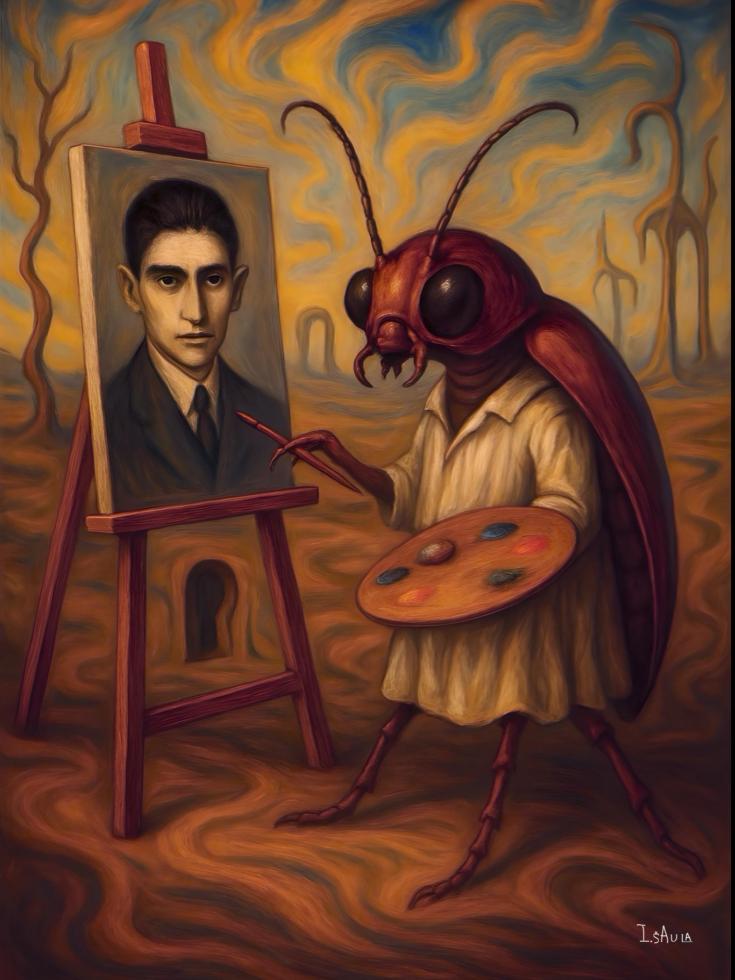 photo: ilij@saula.art
|